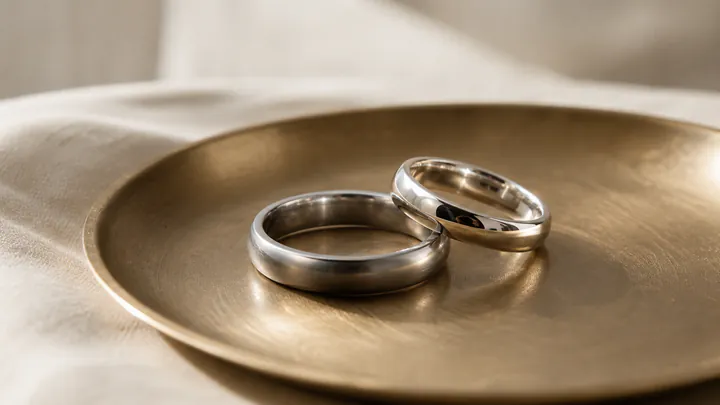
Short answer: settle width and gram weight before price. Buy a plain band wherever it feels right on your hand, and buy a diamond band from a manufacturing jeweller, a goldsmith or a dealer with a workshop.
- Ask what it weighs. A men’s band is mostly metal sold by the gram, and the gap between two 18ct bands in the same window is usually weight, not craftsmanship. Get the grams in writing before you compare a single price.
- Cheaper. A retail counter buys its stones and its bands at trade level and then roughly doubles the price, about three times at a branded name. On a plain band that doubling sits on gold and labour, on a diamond band it sits on the stones as well.
- Better. The specification most buyers want is about five times more common at that level: 52 percent of trade-access stock against 9 percent of retail-held stock, and accent stones travel by the parcel with no certificate to state colour, clarity or origin.
- They do the rest too. Making, flush and channel setting, resizing a set band, refinishing, insurance valuations, repairs and buy-back, on their own bench.
Go to a showroom instead if the wedding is close and the date will not move, you want to try eight widths on your own hand this Saturday, or you want the brand and the box. Trying widths on your own hand is the entire point of the exercise and no workshop quote replaces it.
Mens wedding rings South Africa: start with width and weight, not price
The fastest way to overpay on a men’s band in South Africa is to compare two rings on sticker price when one weighs four grams and the other weighs nine. A men’s wedding ring is mostly a lump of precious metal, and the metal is sold by the gram. A plain 18ct gold band can swing from R8,000 to R22,000 in the same shop window, and almost all of that gap is weight and width, not craftsmanship. So before you look at price, decide on two things: how wide the ring should be, and whether you want it solid or hollowed. Then ask every seller for the gram weight, in writing. That one question protects you more than any brand name.
This is the part of the wedding-ring search that catches men’s rings out specifically. Searches for mens wedding rings South Africa lump plain bands and diamond bands together, but they are two different purchases. A 6mm band on a size T finger uses a lot more gold than a 3mm band on a size N, so a men’s ring of the same metal and quality routinely costs more than the bride’s. That is normal. What is not normal is a wide band that feels suspiciously light, which usually means it has been hollowed to hit a price point and will dent. The diamond version is its own decision: if your band is taking real natural stones, buy from someone who will answer for them, because much of the market lists diamonds it has never handled and simply orders in on demand, with nobody on the hook if the stone disappoints. Establishing which sort of seller you are in front of is a matter of asking, and the diamond buying checklist sets out the questions that get you a straight answer before anything goes into metal.
Comfort fit is the upgrade that matters most
If you do daily physical work, gym, or just dislike the feel of a ring, comfort fit is the single best money you will spend. A standard band has a flat inner wall. A comfort-fit band is domed on the inside, so it glides over the knuckle and sits with a thin contact line rather than a flat edge biting into the finger. On anything 5mm and wider it makes a real difference to whether the ring gets worn at all. It uses a little more metal, so it adds modestly to the price, but on a ring meant for thirty years it is not where you save.
Which metal survives daily wear
For a band worn every single day, durability and feel matter more than fashion. Here is how the common choices actually behave on a man’s hand.
- Platinum. The most durable and, to my mind, the best men’s band metal. It is dense and heavy, which feels substantial, and when it scratches the metal displaces rather than wears away, so it keeps its mass for life. The trade-off is cost, because you are buying more grams of a pricier metal.
- 18ct gold. The value sweet spot. Harder-wearing than people expect, holds a wide profile well, and available in yellow, white or rose. White gold is rhodium-plated and will need re-plating every few years to stay bright. Budget for that.
- 9ct gold. Cheaper and harder than 18ct, but more brittle, so a wide 9ct band can crack rather than bend under a hard knock. Fine for a slimmer ring on a budget, less ideal for a heavy 7mm band.
- Yellow vs white vs rose. Yellow is classic and needs no plating. White reads modern but needs re-plating. Rose is warmer and more style-led. Choose for the look, then let width and metal grade drive the price.
I leave out tungsten, titanium and silicone here. They are durable and cheap, but they hold no real resale value, so if you want a ring that holds value, stay in gold or platinum.
Plain, channel or pave: setting style decides longevity
Most men want a plain band, and a plain band is the lowest-maintenance ring you can buy. If you do want diamonds, the setting style matters more on a men’s ring than on a women’s, because men’s hands take more abuse.
- Plain. Nothing to catch, nothing to lose, easy to resize. The safe default.
- Channel-set. Small diamonds sit recessed in a groove between two metal walls, level with the surface. This is the right way to put diamonds on a daily-wear men’s band, because the stones are protected and nothing snags.
- Pave. Tiny stones held by little beads of metal across the surface. It looks rich, but the beads wear and stones can pop out on a ring that takes knocks. I would avoid pave on a working man’s band.
For the diamond detail itself, the gold and diamond wedding rings guide goes deeper on stone quality, and the broader best wedding rings in South Africa overview compares the routes for buying the pair together.
Real 2026 price anchors
These are honest 2026 ranges for men’s bands in South Africa. Treat them as the metal-and-width story, not a quote.
| Men’s wedding ring type | Typical 2026 range |
|---|---|
| Plain 9ct gold band | R4,000 to R12,000 |
| Plain 18ct gold band | R8,000 to R22,000 |
| Plain platinum band | R18,000 to R40,000 |
| Channel-set diamond men’s band | R18,000 to R80,000+ |
When diamonds enter the picture the arithmetic changes from metal weight to stone specification, and that is where the market gets murky. Two things are worth knowing. The first is what is actually sitting in the cases. Of the 230 GIA-certified natural diamonds I logged from six South African sellers in June 2026, the stock held in retail reached D to G colour with VS2 clarity or better 9 percent of the time. Among sellers working with trade access it was 52 percent. A cheap diamond band is rarely the same stones for less. It is usually lesser stones. The second is that the diamonds on a men’s band are almost never certified individually, because small accent stones are traded by the parcel, so nothing on the ticket obliges anyone to tell you their colour, their clarity, or whether they are natural at all. Ask, and have the answer written on the invoice rather than said across a counter. The South African diamond price index sets out how the price stack works from the trade to the shop floor.
On a men’s band the diamonds are usually small accent stones, so this matters less than on an engagement ring, but the principle holds: a suspiciously cheap diamond band is cheap somewhere you cannot see.
Matching the men’s band to the engagement ring
The most common question I get is whether his ring has to match hers. It does not have to be identical, but the metal colour and finish should agree if the rings appear together in photographs. The usual path is to choose her wedding band first so it sits flush against her engagement ring, lock in that metal family, then pick his band in the same metal at whatever width suits his hand and a matte or polished finish to taste. For the bride’s side of that decision, the wedding rings for women guide and the wedding bands explainer cover fit and stacking in detail.
Where I would buy
For a plain men’s band, retail comparison is genuinely fine. Walk into any reputable jeweller, ask for the gram weight and the resizing policy, and buy the ring that feels right. There is no special trick to a plain gold ring beyond not overpaying for air.
For a diamond band it is worth finding the workshop level, and the way most men try to do that does not work. Searching for a diamond wholesaler or a dealer returns almost nothing useful here, because barely anyone searches those words and the workshops do not advertise with them. What does surface them is the price question. Search what a diamond costs per carat and note who publishes an actual rand figure, because a seller comfortable putting a per-carat number in public is a seller who will quote you metal, making and stones on three separate lines when you ask.
Weight, making, stones. A seller who splits a band into those three lines without being pushed is quoting you the way he was quoted himself, and that alone tells you more than a shop name does. The diamond buying checklist carries the rest of the questions that suit a band specifically: get the gram weight onto the invoice and not just into the conversation, ask whether the accent stones are natural and already in the building or coming out of a parcel nobody has opened yet, ask what resizing a channel-set band will cost in five years, and confirm whether VAT sits inside the number or waits outside it. Put the same four questions to two sellers and the gap between them stops being about branding.
The short version
Mens wedding rings South Africa comes down to a few honest decisions. Decide width, demand the gram weight, take comfort fit on anything 5mm and up, and pick platinum or 18ct gold if you want a ring that lasts and holds value. Keep diamonds channel-set, not pave, on a band that takes daily knocks. For plain bands, shop freely. For diamonds, see the stones before you pay, get natural written on the invoice, and buy from whoever will quote the metal, the making and the stones as three separate numbers.
Ask for the ring the way the trade quotes it
There is a way of asking for a price that changes the entire conversation on a men’s band, and it is nothing clever. It is simply how the trade quotes internally: metal by the gram, plus a making charge, plus stones on their own line.
A retail sticker is one number. Gold, labour, stones and margin all sit inside it, so when a 6mm 18ct band is R19,000 you cannot tell whether you are buying nine grams of gold or four grams and a lot of shop. That is exactly how a hollowed band gets sold at a solid band’s price, and it is the specific way men’s rings get overpriced, because a men’s ring is mostly metal. A manufacturing jeweller, a goldsmith or a dealer with a workshop quotes the other way round, because that is how they themselves buy. The moment a price arrives in three parts, air becomes impossible to hide.
The margin is worth stating once and then leaving alone. A retailer’s supplier is further up the same chain. Trade convention is keystone, meaning the counter price is roughly double the cost, with branded showrooms at about three times, while margins between one trade level and the next run only around 3 to 5 percent a hop. On a plain band that doubling sits mostly on gold and labour, which is why the gram weight question does so much of the work. On a diamond band it sits on the stones too.
I said above that for a plain band retail comparison is genuinely fine, and I meant it. Walk in, ask the gram weight, ask about resizing, buy the one that feels right. Trying widths on your own hand is the whole point of the exercise and no workshop quote replaces it. The trade route earns its place when you want something the case cannot give you: a width the shops do not stock, a heavier solid profile, a flush-set diamond band built for real work, or a band matched to a ring somebody already owns.
So, three short questions. What does this ring weigh in grams, and is it solid or hollowed. What is the making charged at, separately from the metal. And if there are diamonds, are they natural, and may I see the certificate or the parcel before anything goes into metal. A workshop answers all three without pausing. A counter that will not answer the first one has already told you something useful.